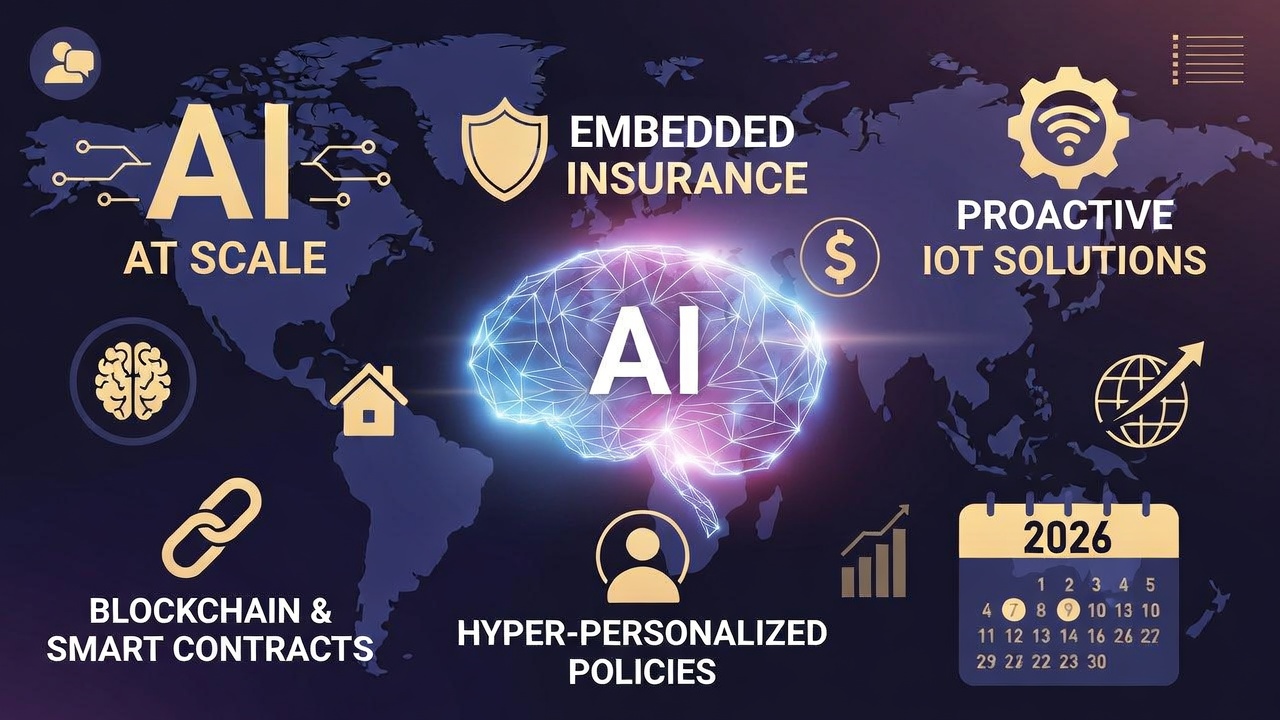
Here are three more innovative insurtech-focused articles with catchy, SEO-optimized titles and concise content outlines suitable for blogs, LinkedIn posts, or YouTube video scripts in the 2026 landscape. These build on current trends: scaled AI agents, embedded & invisible insurance, climate-parametric hybrids, blockchain for micro-payouts, and the rise of “insurance-as-a-service” platforms.
Article 1
Title: Agentic AI: The 2026 Insurance Co-Pilot That Thinks, Negotiates, and Settles Claims Autonomously
Summary / Key Points In 2026 agentic AI (autonomous AI agents) has moved from science fiction to production in leading insurers.
- AI agents now handle end-to-end claims: read policy, gather telematics/IoT data, assess damage via drone photos & satellite imagery, negotiate with repair shops, issue parametric micro-payments, and update the customer—all without human touch for simple cases.
- Early adopters report 40–65% faster cycle times and 25–35% lower adjustment expenses.
- Regulatory guardrails (explainability, human override paths, audit trails) are now mandatory in EU, UK, Singapore, and several US states.
- Biggest opportunity: small & medium enterprises (SMEs) – AI agents can underwrite gig-economy risks, freelance income protection, or micro-business cyber coverage in minutes.
- 2026 prediction: by year-end at least 15–20 global carriers will have agentic workflows in at least one major line of business.
Call-to-action hook “Would you trust an AI to settle your claim? In 2026 many already do—and they’re getting paid faster.”
Article 2
Title: Invisible Insurance 2026: When Coverage Disappears Into the Background (and That’s a Good Thing)
Summary / Key Points Embedded insurance evolves into “invisible insurance” – protection that activates automatically without the customer ever seeing a policy document or clicking “buy insurance.”
- Examples already live or in pilot in 2026:
- Electric scooter rental → automatic 30-minute liability & medical cover
- Food delivery app → real-time courier accident & theft protection scaled to distance traveled
- Home renovation platform → builder’s risk + workmanship warranty embedded in quote
- EV charging station → battery degradation + fire coverage for the session
- Tech stack: real-time APIs, event-based triggers (location, IoT signals, transaction metadata), micro-premiums deducted invisibly.
- Revenue model shift: insurers move from selling policies → earning “protection-as-a-service” fees (often 1–4% of transaction value).
- Challenges: regulatory sandboxes expanding rapidly, but consumer consent & data minimisation rules are tightening.
- 2026 forecast: invisible/embedded lines will represent 12–18% of global personal-lines premium growth (up from ~5–7% in 2024–25).
Hook “The best insurance is the one you never have to think about—2026 is making that real.”
Article 3
Title: Parametric Climate Insurance Goes Mainstream: From Niche Product to Household Essential in 2026
Summary / Key Points After record heatwaves, floods, and wildfires 2024–2025, parametric (index-triggered) climate products explode in adoption.
- No-claims, no-loss-adjuster model: payout triggered when weather station / satellite data hits pre-agreed thresholds (e.g., >38 °C for 5 consecutive days, rainfall <10 mm in 30 days, wind gust >120 km/h).
- 2026 product boom:
- Smallholder farmers in Punjab, Sindh, Uttar Pradesh → drought & excessive rain coverage
- Urban apartment owners in Karachi, Lahore, Multan → extreme heat / monsoon flood parametric riders
- SME supply-chain policies → business interruption triggered by regional port closures due to cyclones
- Personal lines add-ons → “heat-stroke hospital cash” or “crop failure income bridge”
- Advantages: payouts in 24–72 hours, transparent, fraud-resistant.
- Growth drivers: reinsurers pushing capacity into parametric layers, mobile-wallet integrations for instant micro-payouts, government/NGO partnerships scaling coverage in emerging markets.
- 2026 milestone prediction: parametric climate products exceed US$ 8–12 billion in gross written premium globally (up from ~$3–5B in 2024).
Local relevance hook (for Pakistan readers) “In Multan’s scorching summers and unpredictable monsoons, waiting weeks for a claim might soon be history—parametric payouts could arrive before the temperature drops.”